CyberArk
CyberArk offers a portfolio covering controlling elevated credentials and privileged sessions and controlling how software obtains and uses credentials. The entries in this catalog include Endpoint Privilege Manager, Privileged Access Manager and Secrets Manager. Endpoint Privilege Manager focuses on endpoint least privilege and application control. Privileged Access Manager focuses on privileged credential control and session protection. Secrets Manager focuses on application credential and secret management. When reviewing CyberArk, compare the named products individually: a platform family, a specific module and a managed service can have different scopes and purchasing requirements. Selection should account for credential onboarding, access approvals, session controls and the operational impact of least-privilege policies. Portfolio detail - Endpoint Privilege Manager: the catalog lists Just-in-time access, Least-privilege enforcement. - Privileged Access Manager: the catalog lists Privileged credential vaulting, Least-privilege enforcement. - Secrets Manager: the catalog lists Application secret storage, Developer and pipeline integration, Fine-grained access policy. For procurement, map each required capability to a named offering and confirm the edition, dependencies and delivery responsibility with the vendor. Product-level entries below provide the operational context and evaluation questions for that comparison.
Documented Software Products (4)
CyberArk Privilege Cloud
SaaS-based Privileged Access Management solution that securely stores, rotates, and isolates privileged credentials and monitors administrative sessions.
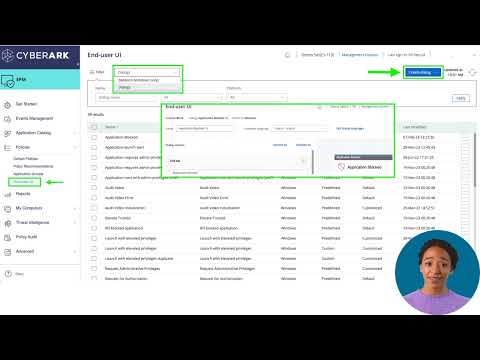
Endpoint Privilege Manager
Endpoint Privilege Manager from CyberArk focuses on endpoint least privilege and application control. It is privileged access management technology used for controlling elevated credentials and privileged sessions. Capabilities - Just-in-time access: Limits privileged access to the period or approval conditions defined for a task. - Least-privilege enforcement: Restricts routine access so users and applications do not retain unnecessary elevated permissions. Use and operational context Endpoint Privilege Manager is relevant to administrators governing access to sensitive systems when the requirement centers on controlling elevated credentials and privileged sessions. Scope the evaluation around the functions listed above and the assets or workflows that need coverage. A useful trial should use representative business conditions so the team can assess the quality of the results and the effort needed to act on them. Deployment and evaluation Operating systems listed in the available documentation: Windows, Linux. Supported versions and feature coverage depend on the vendor support matrix.. Check version requirements and feature differences before rollout. Before adoption, review credential onboarding, access approvals, session controls and the operational impact of least-privilege policies. Assign an owner for administration, document required permissions and identify how the product or service will fit the existing operating process. Buyer questions - What is the main purpose? Endpoint Privilege Manager focuses on controlling elevated credentials and privileged sessions. - What should a proof of concept establish? Test the listed capabilities against representative assets and workflows, record useful results and unresolved gaps, and confirm who handles follow-up work. - What should be confirmed before purchase? Ask the vendor which edition or service scope includes the required features, which dependencies must be configured and what licensing or contract terms apply. Pricing has not been verified for this catalog.
Privileged Access Manager
Privileged Access Manager from CyberArk focuses on privileged credential control and session protection. It is privileged access management technology used for controlling elevated credentials and privileged sessions. Capabilities - Privileged credential vaulting: Stores privileged credentials under centrally administered access controls. - Least-privilege enforcement: Restricts routine access so users and applications do not retain unnecessary elevated permissions. Use and operational context Privileged Access Manager is relevant to administrators governing access to sensitive systems when the requirement centers on controlling elevated credentials and privileged sessions. Scope the evaluation around the functions listed above and the assets or workflows that need coverage. A useful trial should use representative business conditions so the team can assess the quality of the results and the effort needed to act on them. Deployment and evaluation Deployment: Cloud service / SaaS; Self-managed / on-premises option documented by the vendor. Before adoption, review credential onboarding, access approvals, session controls and the operational impact of least-privilege policies. Assign an owner for administration, document required permissions and identify how the product or service will fit the existing operating process. Buyer questions - What is the main purpose? Privileged Access Manager focuses on controlling elevated credentials and privileged sessions. - What should a proof of concept establish? Test the listed capabilities against representative assets and workflows, record useful results and unresolved gaps, and confirm who handles follow-up work. - What should be confirmed before purchase? Ask the vendor which edition or service scope includes the required features, which dependencies must be configured and what licensing or contract terms apply. Pricing has not been verified for this catalog.
Secrets Manager
Secrets Manager from CyberArk focuses on application credential and secret management. It is application secrets management technology used for controlling how software obtains and uses credentials. Capabilities - Application secret storage: Provides a controlled storage and access workflow for application credentials and other secrets. - Developer and pipeline integration: Connects secrets access with the development or delivery tools supported by the product. - Fine-grained access policy: Controls which identities or workloads can access a given secret. Use and operational context Secrets Manager is relevant to development and infrastructure teams handling nonhuman access when the requirement centers on controlling how software obtains and uses credentials. Scope the evaluation around the functions listed above and the assets or workflows that need coverage. A useful trial should use representative business conditions so the team can assess the quality of the results and the effort needed to act on them. Deployment and evaluation Deployment: Cloud service / SaaS; Self-managed / on-premises option documented by the vendor. Before adoption, review secret retrieval, access policy, rotation behavior and the consequences of a service or network interruption. Assign an owner for administration, document required permissions and identify how the product or service will fit the existing operating process. Buyer questions - What is the main purpose? Secrets Manager focuses on controlling how software obtains and uses credentials. - What should a proof of concept establish? Test the listed capabilities against representative assets and workflows, record useful results and unresolved gaps, and confirm who handles follow-up work. - What should be confirmed before purchase? Ask the vendor which edition or service scope includes the required features, which dependencies must be configured and what licensing or contract terms apply. Pricing has not been verified for this catalog.
Official Product Demos & Technical Videos (2)
Verified product demonstrations, architecture walkthroughs, and technical overviews direct from CyberArk.
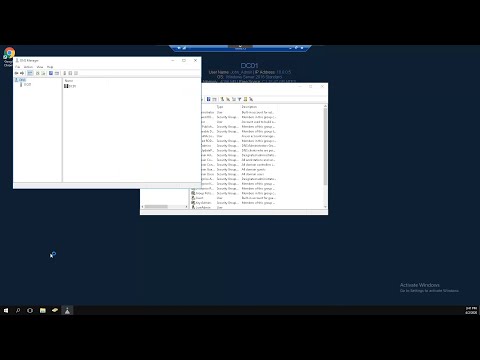
CyberArk Privilege Cloud Demo & PAM-as-a-Service